Insulation: information, applications and technical support from RIZAKOS, an expanded polystyrene manufacturer in Greece.
insulation
The hidden "QUALITY OF LIFE" in construction, which offers warmth in winter and coolness in summer, thus achieving energy savings and amortization of our money.
energy saving
& Economy
In insulation applications it is very difficult to intervene after the fact. To avoid unpleasant surprises, we should ask for advice from the insulation experts.
The choice of insulating materials is considered particularly critical. An important factor for choosing the most suitable material is the Thermal Conductivity factor "λ", which characterizes each material and the smaller it is, the better thermal insulation properties it offers.
The cost of insulating materials in a building is statistically 2% of the total cost of the construction. In the construction phase insulation is cheap, but when the house is finished it becomes more expensive and difficult to repair.
Expanded Polystyrene (EPS) as an insulating material has the best price-performance ratio.
The new Community Directive 2002/91 EC Energy Performance Directive (EPD) of the European Parliament and the Council of 16.12.2002 obliges the Energy Certification of all Buildings in all procedures (construction, sale, rental) in existing and new buildings. Therefore, each building will obtain its own Energy Performance Certificate.
The new EN 13163:2015 standard, in contrast to the old ELOT 450, protects the consumer from poor quality Expanded Polystyrene (EPS) products, known until now as "foam", in which there was no separation in terms of specifications, it simply referred to Kgr/m3. According to the old classification, (ELOT 450 standard) it was divided into 5 basic categories with the only criterion being the density: 15 / 20 / 25 / 25 / 30 / 35 Kgr/m3, without any reference to the thermal insulation properties of each category.
The new EN 13163:2015 standard classifies and categorizes Expanded Polystyrene (EPS) according to the performance of the material in endurance (such as compression, bending, tensile), technical characteristics (such as thermal conductivity λ) and tolerances depending on use (such as dimensions, flatness), defining 16 basic categories. Each producer checks compliance with the limits set by the standard.
Each product now has its own identity, based on its technical properties, markings and a characteristic colour, for easy identification by the customer.
Certified Cut White Expanded Polystyrene (EPS) with flame retardant
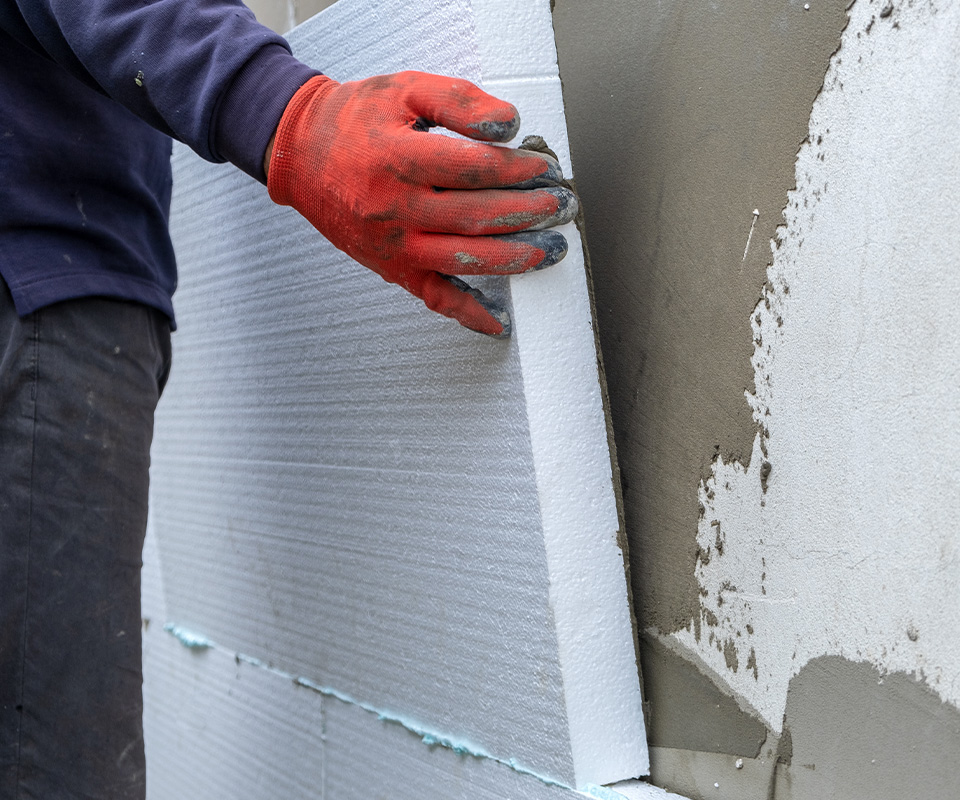
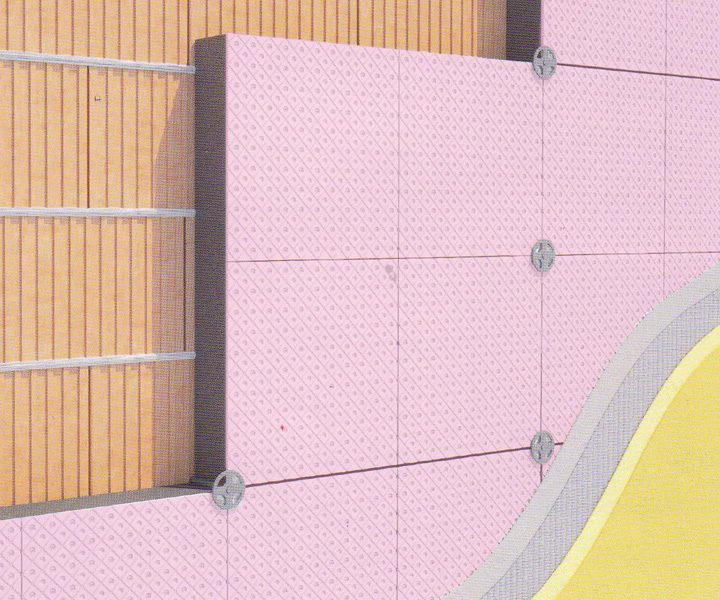
The THP group is a new subgroup of EPS Expanded Polystyrene products that was created exclusively for the application of the External Thermal Insulation of Buildings (ETICS). All products of the THP group have flame retardant, produced from 28-day curing blocks for maximum dimensional stability in any temperature change subjected to a wall, cut with the strictest dimensional tolerances in 3 dimensions, but also in squareness and flatness and constantly checked for their tensile strength perpendicular to the surfaces and bending in the company's laboratory. The basic EPS products aimed for external thermal insulation are certified beyond the main EPS standard EN 13163 and based on the requirements of EN 13499 and EAD 0404 standards that govern the application of external thermal insulation through the German certification body GSH.
The types of ISOPOR THP are used by most companies that have External Thermal Insulation Systems with Expanded Polystyrene EPS in the Greek market and are the most suitable thermal insulation solution. The application of external thermal insulation is the best thermal insulation solution in a building and especially in existing ones since it is one of the few solutions that can be applied after the completion of construction. Expanded polystyrene EPS is used in 9 out of 10 external thermal insulation applications instead of other thermal insulation materials according to data from the European Association of External Thermal Insulation Systems Companies EAE.
Certified Cut White Expanded Polystyrene (EPS) with flame retardant
Our company, in the context of compliance with the European Directives (CPD) concerning the production and placing on the market of Building Products, decided to make available to the market the series of insulation products with the Isopor brand and CE marking. These products are produced according to the strictest European specifications (EN 13163:2015 standard) and are the most advantageous solution, from a QUALITY and ECONOMIC point of view, in modern construction. They are produced in dimensions of 2.50 X 0.60m, 1.25 X 0.60m, 1.00 X 0.60m and 2.00 X 1.00m for thermal insulation applications and anti-seismic joints and in any other dimension upon request.
NEOPOR is expandable polystyrene with graphite and is an innovation of at BASF. By adding graphite to the EPS mass, it acquires a silver gray color and improves the Thermal Conductivity factor λ by 20%.
Certified Cut Graphite Expanded Polystyrene (NEOCOAT EPS) with flame retardant suitable for external thermal insulation (ETICS)
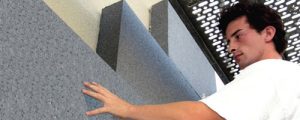
The thermal insulation material of the future is called Neocoat. Neocoat is produced from Neopor® raw material, a product of intensive research by BASF® and is a new innovative Expanded Polystyrene material. It has a silver-gray color and offers significantly improved thermal insulation performance compared to conventional thermal insulation materials.
Innovation in Insulation
In every material heat is transferred by conduction, convection, and radiation. In closed cell materials such as Expanded Polystyrene (EPS) there can be no air movement and thus conduction heat transfer is minimized.
Therefore, in conventional Expanded Polystyrene heat transfer occurs mainly by convection and radiation. In Neocoat the microscopic graphite particles contained in 3% of its composition act as reflectors that prevent the transmission of heat by radiation, allowing only convection to contribute to heat loss. As a result, thermal insulation boards made of Neopor® have 15% - 20% better thermal insulation properties than conventional white Expanded Polystyrene (EPS).
With the exception of its improved thermal insulation performance even at low densities compared to Expanded Polystyrene (EPS), Neocoat retains all the advantages of the mechanical and ecological properties of EPS.
Neocoat is produced from raw material that contains flame retardants (HBCD Free).
The NEOCOAT THP group is a new sub-group of Graphite Expanded Polystyrene EPS products which was created exclusively for the application of External Thermal Insulation of Buildings. For this reason, the insulation boards made from BASF's Neopor® Raw Material are cut from blocks that have remained in the warehouse for 14 days before being cut into boards, so that their contractions are completed and they show excellent dimensional stability, they are cut with the strictest dimensional tolerances in 3 dimensions, but also in squareness and flatness and are constantly checked for their tensile strength perpendicular to the surfaces and bending in the company's factory and laboratory. The basic EPS products aimed at external thermal insulation are certified beyond the main EPS standard EN 13163 and based on the requirements of EN 13499 and EAD 0404 standards that govern the application of external thermal insulation through the German certification body GSH.
NEOCOAT THP types are used by most companies that have External Thermal Insulation Systems with Expanded Polystyrene EPS in the Greek Market and are the most suitable thermal insulation solution. The application of external thermal insulation is the best thermal insulation solution in a building and especially in existing ones it is one of the few solutions that can be applied. The application of External Thermal Insulation with EPS is used in 9 out of 10 external thermal insulation applications instead of other thermal insulating materials according to data from the European Association of External Thermal Insulation Systems Companies EAE.
Certified Moulded Graphite Expanded Polystyrene (EPS) with flame retardant from renewable materials.
The newest thermal insulation material must be produced from the raw material Neopor® BMB (biomass balance). Neopor BMB is a BASF research product that comes from biomass in its production process and saves valuable resources while simultaneously reducing CO2 emissions. Neopor BMB is expandable polystyrene with graphite, made from biodiesel and biogas, resulting from renewable sources of biomass, in specific organic or forest waste.
BASF's biomass balance (BMB) approach, certified according to the requirements of the German REDcert2 system, means that the mineral raw materials required for the production of Neopor® can be replaced with renewable raw materials. Production methods of this kind save valuable resources and reduce CO2 emissions at the same time. RIZAKOS company has the same certification so that it is also a certified member of the biomass management chain that meets the conditions for the production of products with a reduced carbon footprint.
The thermal insulation boards of our company, produced by 50% Neopor BMB raw material and 50% conventional Neopor raw material, further protect the environment and the climate, while maintaining their usual high quality, because the properties of the material are identical to those of its equivalent mineral. It therefore maintains its excellent thermal insulation capabilities, is water repellent, easy to handle, flexible and economical.
The CO2 emitted during the production of such a low carbon footprint EPS board is reduced by up to 40% compared to a conventional EPS board.
G.K. RIZAKOS SA innovates once again in the field of insulation by bringing to Greece for the first time the raw material of BASF®, Neopor® BMB with which it developed new series of thermal insulation boards, Neoplak Bio Derived, Neoplak THP Bio Derived, Neotetto Bio Derived, Neotetto Air Bio Derived and ipor Bio Derived covering the entire range of insulation applications.
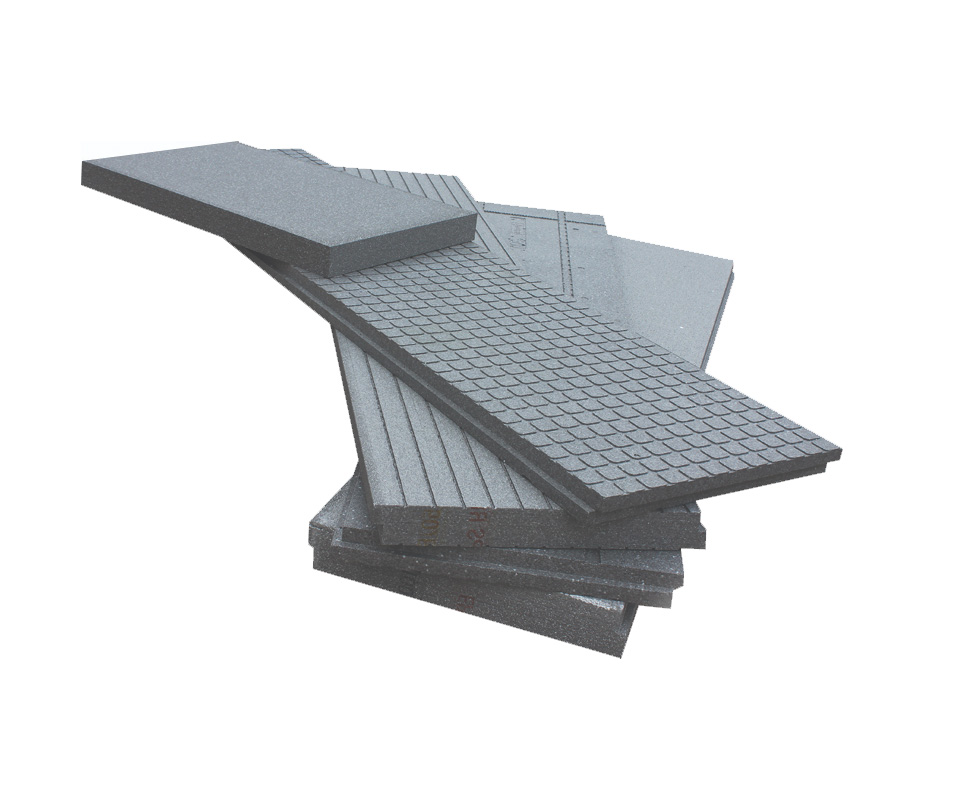
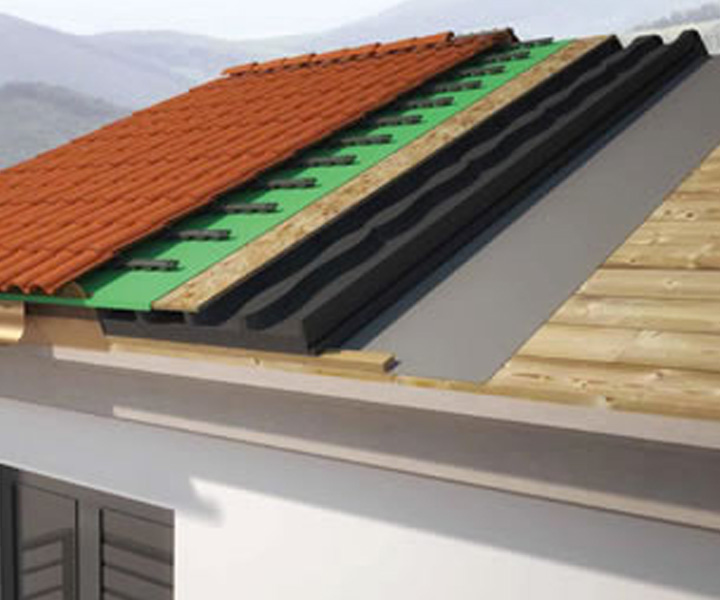
Roman-style tile sleepers made of enriched graphite Expanded Polystyrene with flame retardant, for the insulation of wooden and concrete roofs with Thermal Conductivity factor λd = 0,030 W/mK.
Neotetto® Bio Derived is an enriched graphitic moulded Expanded Polystyrene (EPS) in a thickness of 60 mm and is properly formed with flaps for thermal insulation of ceramic roofs without thermal bridges. Packed in silver film in parcels of 5.4 m2. Produced according to the EN 13163:2015 standard, it has certificates for its production according to ISO 9001 and CE marking. It has a slot for a 5 x 1.5 cm purlin. Perpendicular to the joists, it has 3×2 cm channels for the ventilation of the roof, which are used for the drainage of any water that may pass through. Estimated to save 5lt. oil per m2 of roof in the B climate zone of Greece.
Neoplak Bio Derived
Certified Moulded Graphite Expanded Polystyrene (EPS) with flame retardant from renewable materials.
Thermal Resistance for thickness d=100mm EPS 100, 150, 200 R = 3,333 m2 K/W
The newest thermal insulation material must be produced from the raw material Neopor® BMB (biomass balance). Neopor BMB is a BASF research product that comes from biomass in its production process and saves valuable resources while simultaneously reducing CO2 emissions. Neopor BMB is expandable polystyrene with graphite, made from biodiesel and biogas, resulting from renewable sources of biomass, in specific organic or forest waste.
BASF's biomass balance (BMB) approach, certified according to the requirements of the German REDcert2 system, means that the mineral raw materials required for the production of Neopor® can be replaced with renewable raw materials. Production methods of this kind save valuable resources and reduce CO2 emissions at the same time. RIZAKOS company has the same certification so that it is also a certified member of the biomass management chain that meets the conditions for the production of products with a reduced carbon footprint.
The thermal insulation boards of our company, produced by 50% Neopor BMB raw material and 50% conventional Neopor raw material, further protect the environment and the climate, while maintaining their usual high quality, because the properties of the material are identical to those of its equivalent mineral. It therefore maintains its excellent thermal insulation capabilities, is water repellent, easy to handle, flexible and economical.
The CO2 emitted during the production of such a low carbon footprint EPS board is reduced by up to 40% compared to a conventional EPS board.
G.K. RIZAKOS SA innovates once again in the field of insulation by bringing to Greece for the first time the raw material of BASF®, Neopor® BMB with which it developed new series of thermal insulation boards, Neoplak Bio Derived, Neoplak THP Bio Derived, Neotetto Bio Derived, Neotetto Air Bio Derived and ipor Bio Derived covering the entire range of insulation applications.
Graphite thermal insulation boards for THP external thermal insulation, double masonry, pitched roofs and concrete elements with Thermal Conductivity λd = 0.030 W/mK
Neoplak® THP Bio Derived for ETICS is produced from a mold, without grooves and its name is embossed on the plate. Neoplak® Bio Derived for building use is produced from a mold, has sidewalls on all sides, an embossed meter for ease of cutting and an embossed name on the slab.
They are packaged in silver polyethylene film printed with the name Neoplak® Bio Derived.
It is produced according to the specifications of the EN 13163:2015 standard and has certificates for its production according to ISO 9001:2015 and CE marking.
It is available in four types THP for external thermal insulation thermal facade, TX-TT for thermal insulation of double masonry and pitched roof, BT for thermal insulation of concrete elements and AM for thermal insulation of roofs, refrigerator floors and perimeter basement walls.
THP is produced in dimensions of 1,200 x 600 mm and in 7 different thicknesses of 50, 60, 70, 80, 100, 120 and 140 mm.
TX-TT, BT and AM are produced in dimensions of 2,500 x 600 mm and in 7 different thicknesses of 30, 40, 50, 60, 70, 80 and 100 mm.
Neocoat
Certified Cut Graphite Expanded Polystyrene (EPS) with flame retardant
thermal conductivity
EPS 200 λ = 0.030 W / mK
EPS 150 λ = 0.030 W / mK
EPS 100 plus λ = 0.030 W / mK
EPS 80 plus λ = 0.030 W / mK
Thermal Resistance for thickness d=100mm
EPS 200 R = 3.333 m2 K/W
EPS 150 R = 3.333 m2 K/W
EPS 100 R = 3.333 m2 K/W
EPS 80 R = 3.333 m2 K/W
Produced in 4 types depending on the application:
NEOCOAT ВТ-АМ EPS 200: Cut boards with ridges and grooves for thermal insulation of concrete elements and inverted roofs
NEOCOAT BT EPS 150: Cut boards with ribs and grooves for thermal insulation of concrete elements.
NEOCOAT TX EPS 100 PLUS: Cut boards with flaps for thermal insulation of masonry
NEOCOAT TT EPS 100 PLUS: Cut boards for thermal insulation of tiled roofs
Neocoat
The thermal insulation material of the future is called Neocoat. Neocoat is produced from Neopor® raw material, a product of intensive research by BASF® and is a new innovative Expanded Polystyrene material. It has a silver grey colour and offers significantly improved thermal insulation performance compared to conventional thermal insulation materials.
Innovation in Insulation
In any material heat is transmitted by conduction, convection and radiation. In closed cell materials such as Expanded Polystyrene (EPS) there can be no air movement and thus conduction heat transfer is minimized. Therefore, in conventional Expanded Polystyrene heat transfer occurs mainly by convection and radiation. In Neocoat the microscopic graphite particles contained in 3% of its composition act as reflectors that prevent the transmission of heat by radiation, allowing only convection to contribute to heat loss. As a result, thermal insulation boards made of Neopor® have 15% - 20% better thermal insulation properties than conventional white Expanded Polystyrene (EPS). With the exception of its improved thermal insulation performance even at low densities compared to Expanded Polystyrene (EPS), Neocoat retains all the advantages of the mechanical and ecological properties of EPS. Neocoat is produced from raw material that contains flame retardants (HBCD Free).
Advantages
Neocoat presents:
Dimensional stability
Resistance to bacteria and fungi
Zero nutritional value for insects and rodents
Zero toxicity
Self-extinguishing behaviour in fire
100% recyclable
Why Neocoat?
Neocoat presents the lowest coefficient of thermal conductivity (λ = 0.031 W / m K) of all foam plastics.
It meets the specifications of the EN 13163:2015 standard "Thermal insulation products for buildings - factory production of expanded polystyrene products".
Thermal insulation boards for flat roofs, foundations and perimeter basement walls
thermal conductivity
λd = 0.033 W / m K
Thermal Resistance for thickness d = 50 mm
Rd = 1,515 m2 K/W
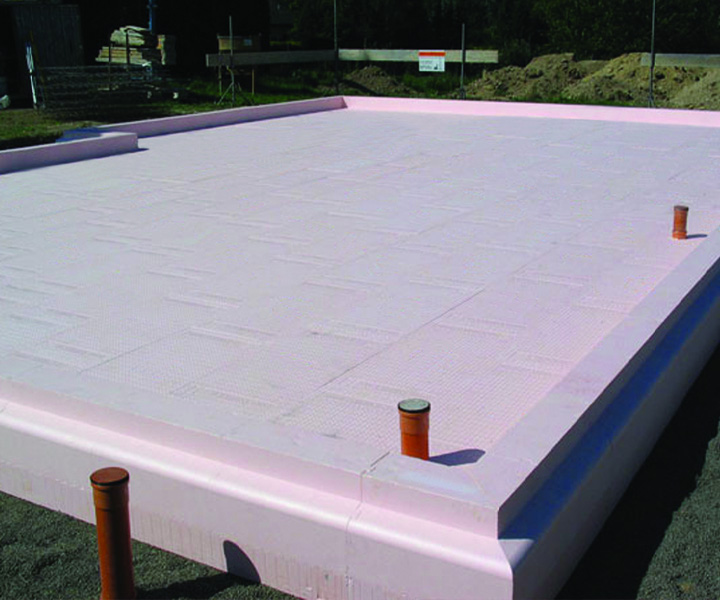
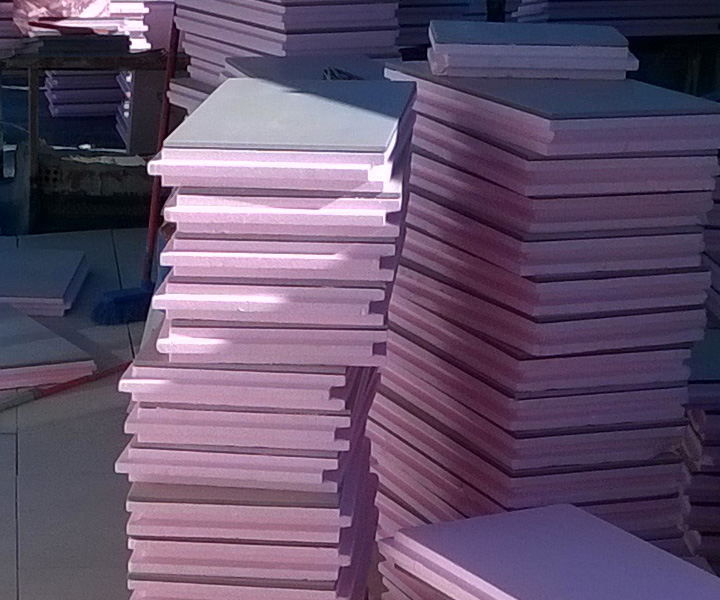
Peripor thermal insulation boards are the product of intensive research by BASF and are a new innovative Expanded Polystyrene (EPS) material. They are pink in color and offer significantly reduced moisture absorption compared to conventional heat insulating materials. Peripor is Expanded Polystyrene of high density and low water absorption.
It is produced according to the specifications of the EN 13163: 2015 standard and has certificates for its production according to ISO 9001:2015 and CE marking. Due to its high compressive strength (250 kpa at 10% deformation) and its practically zero water absorption, it can be used in thermal insulation and waterproofing applications up to 6 m deep.
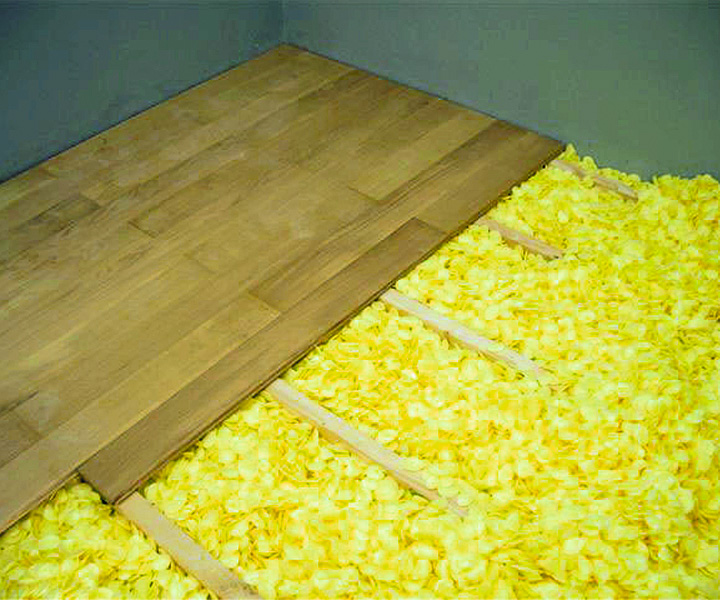
Soundproof Filling of Wooden Floors from Special Granules of Expanded Polystyrene (EPS) with flame retardant
Thermal Conductivity:
λ = 0,056 W / mK
Thermal Resistance for thickness d=50mm
R = 0,893 m2K / W
Based on the Building Regulations, buildings must be designed and constructed in such a way as to protect the occupants from any form of noise within the boundaries of their residence, when the noises do not come from them.
The DIN 4109 standard distinguishes two ways in which sound is transmitted: airborne, usually external building noises and solid-borne (impact-borne), usually internal building noises. Impact noises that can come from walking, moving appliances and furniture, bad seating of appliances, etc. they can become particularly annoying in modern buildings, as horizontal and vertical structural elements have rarely been thoroughly soundproofed to date.
The necessary soundproofing from impact noises cannot be done simply, such as e.g. installing double glazing to reduce external airborne noises.
STYROFILL is the only easy and economical way to fill wooden floors without unpleasant surprises. Due to its special characteristics (does not absorb moisture and odors, does not preserve fungi or mold, does not cause itching to the craftsman who installs it, allows ventilation of the wood and does not preserve the flame) it is an ideal solution to the problem of soundproofing floors from impact noises, while also offering thermal insulation.
It is used on nailed wooden floors (by filling the gaps it eliminates the noise that comes from the drumming that the floor creates with stepping or falling objects) and after a relevant test, it has a certificate from the National Technical University of Athens - Technical Materials Laboratory - Sound Engineering Laboratory, which states that it has a Sound Insulation Capacity Lnw = 53 dB. The results showed that in order to have a satisfactory performance in the sound insulation of wooden floors, STYROFILL should be combined with elastic inserts (details can be found in the technical characteristics sheet).
Certified Moulded Graphite and Pink Expanded Polystyrene (EPS) with flame retardant from renewable materials
Ipor Bio Derived is a composite hybrid thermal insulation board with a hard skin of pink expanded polystyrene EPS 200 from BASF's PERIPOR Raw Material and a core of graphitic expanded polystyrene EPS 100 from BASF's NEOPOR Raw Material and NEOPOR BMB and is the ideal solution for the application of external thermal insulation of buildings. Ipor Bio Derived has a thermal conductivity λd = 0.031 W / mK.
Its production follows the principles of ISO 9001:2015 and meets the specifications of the standard EN 13163:2015 and EAD 0404, which is why it has the corresponding certificates and CE marking. At the same time, it is accompanied by the Redcert2 certificate like all materials produced from Neopor BMB raw material.
Find out about the construction of low energy buildings with EPS from the European Association of Expanded Polystyrene Manufacturers EUMEPS
Special Composite Sheets of Pink or Gray Molded Expanded Polystyrene (EPS) with flame retardant for Thermal Insulation of flat roofs
Composite heat-insulating tiles of dimensions 30 X 60 X 6cm. They consist of a moulded plate of Expanded Polystyrene EPS 250, in thickness of 5, 7 and 10 cm and have a coating of a special off-white granite tile 1cm thick. The sides of the plate are "ripped" to achieve a very good fit, stability and pass ability of the roof. The plates are quick and easy to install and provide the ability to detach and reuse as well as repair in case of failure.
Isotile is manufactured from PERIPOR EPS 250 raw material with thermal conductivity λd = 0.033 W/mK or from NEOPOR PLUS EPS 250 and Neopor BMB raw material with thermal conductivity coefficient λd = 0.030 W/mK.
Special hard moulded boards of Expanded Polystyrene with flame retardant, high density, characterized by their high compressive strength and very good thermal conductivity, suitable to be used for laying plastic pipes for underfloor heating.
They are produced in two types with a compressive strength of 150 and 200 kpa for 10% deformation, which are available with or without a water vapour barrier, made of polystyrene (PS) film, which ensures zero water absorption. All types of Isofloor come with perimeter tape and break joint tape made of polyethylene foam.
Ideal ventilated pitched roof insulation system from renewable materials
Neotetto Air® Bio Derived is the only thermal insulating roof panel with integrated ventilation channels designed to increase the efficiency of ventilation in ventilated pitched roofs and offers excellent thermal insulation.
It consists of a specially formed plate with dimensions of 1.20m x 1.20m of 50% Neopor BMB material and 50% of conventional Neopor material EPS 100, combined with a 9mm thick OSB-3 panel suitable for external use.
Advantages of Neotetto Air® Bio Derived
Great ventilation: the special shape of the ventilation channels improves ventilation efficiency, maximizes the air intake section and heat removal from the upper part of the roof which would otherwise be overheated by the summer sun. Even in winter, ventilation is beneficial because at high altitudes where snowfalls are frequent, it allows the snow to melt evenly, preventing stagnant water that could penetrate inside the roof.
Overall durability: Neotetto Air® Bio Derived has excellent compression resistance. The larger surface area of the EPS ribs, due to their special configuration, increases the load-bearing capacity of the panel, better supporting the OSB, thus reducing the risk of bending when walking when the roof is being built.
Reduces heat loss in winter and maintains a cool environment in summer, allowing for a reduction in energy consumption for heating and cooling, resulting in significant savings in money
It does not deteriorate over time, is not affected by microorganisms, mold and weather conditions, ensuring health and long-term energy savings
It contributes to the protection of the environment, the reduction of consumption, because it emits small amounts of CO2 into the atmosphere (greenhouse effect) and the conservation of energy sources
Compatible with any type, slope and roof covering
Sturdy, walkable, easy to handle and provides space saving
Easy to install, even by one person, with simple equipment
It has pads to avoid thermal bridges
Noise during application is minimal, thanks to the small size of the panel
It is environmentally friendly, since it consists entirely of recyclable materials
It allows the use of all possible membrane combinations
Our company, in the context of compliance with the European Directives (CPD) concerning the production and placing on the market of Building Products, decided to make available to the market a new series of insulation products with the brand name EXPOR and CE marking. These products are produced according to the strictest European specifications and are the most advantageous solution where there is a need for very high mechanical strength of thermal insulation, in modern construction. They are produced in dimensions 2.5 X 0.6m and 1.25 X 0.6m for thermal insulation applications of masonry, formwork, tiled roofs, thermal insulation of floors and cold rooms.
The thermal conductivity starts from λd = 0.032 W/mK for 3cm thick plates and reaches λd = 0.034 W/mK for 10 cm thick plates in Expor.
IMPLICATIONS:
C/P On Order
# 125 X 60, 200 X 100, 250 X 60, 250 X 100
- common use in EUMEPS Member States
=not possible from the operational requirements
-not required/applied normally unless the properties are explicitly required
1) Where there are load distribution beams 2) when cargo is carried



























 EN
EN  EL
EL