Costruction: information, applications and technical support from RIZAKOS, an expanded polystyrene manufacturer in Greece.
Costruction
Expanded Polystyrene (ΕPS) is used in construction thanks to its properties as a light and heat-insulating material, with excellent mechanical strength. It is used in civil engineering applications such as geotechnical projects and earthquake protection. The choice of materials requires detailed attention and the cost is quite affordable
Our company has the expertise and experience to offer you new, innovative and above all certified products. Today there are new building materials that many do not know about, which offer better results than the old inert materials (eg bricks etc.). These materials provide greater safety in constructions, time savings and better aesthetics in construction.
Geofoam
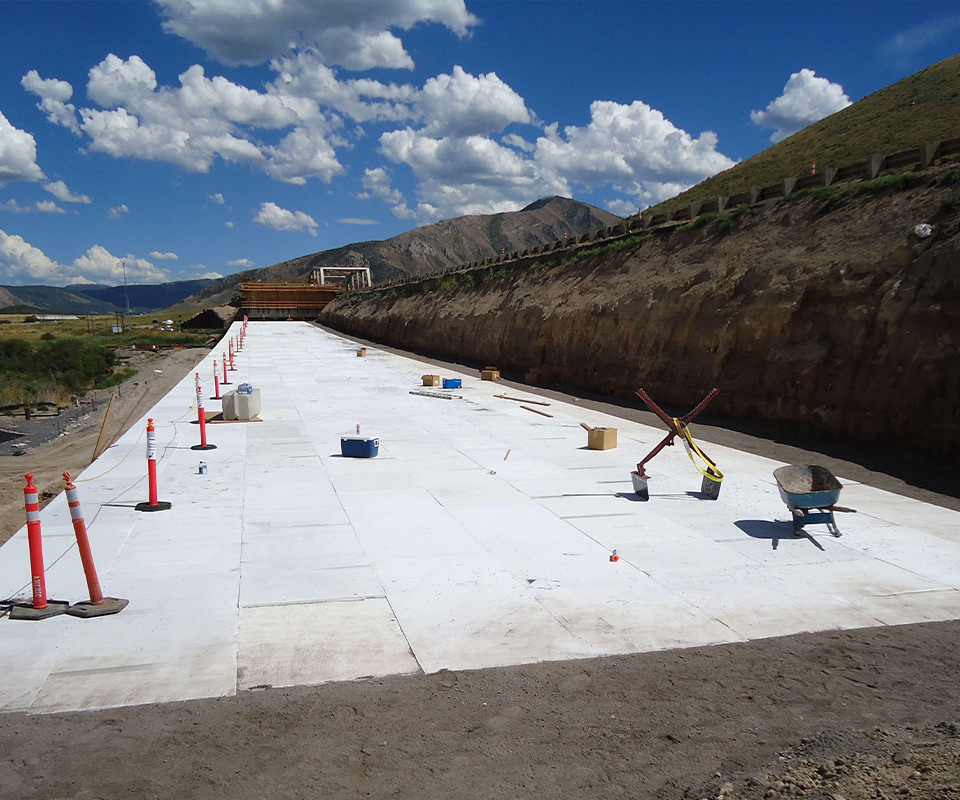
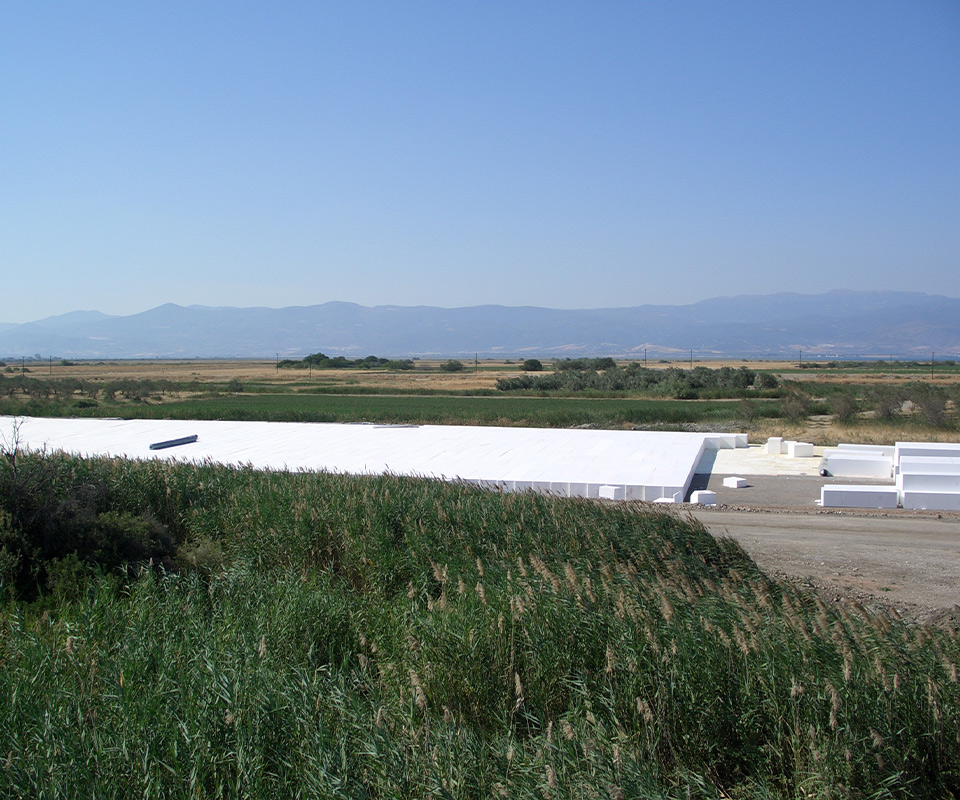
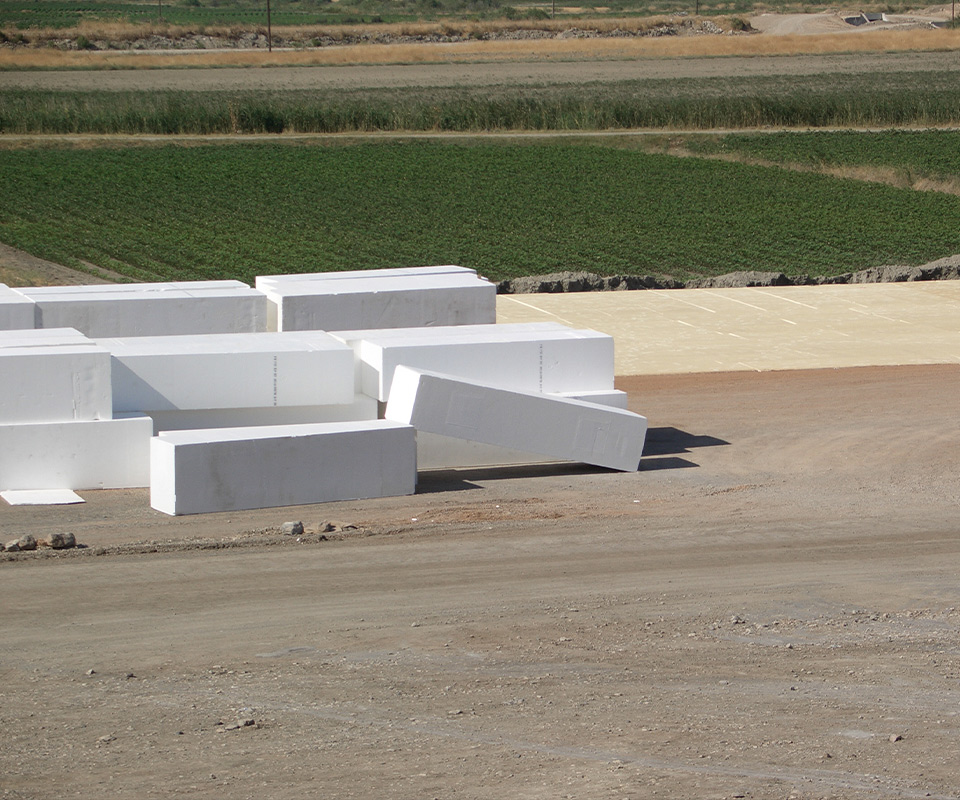
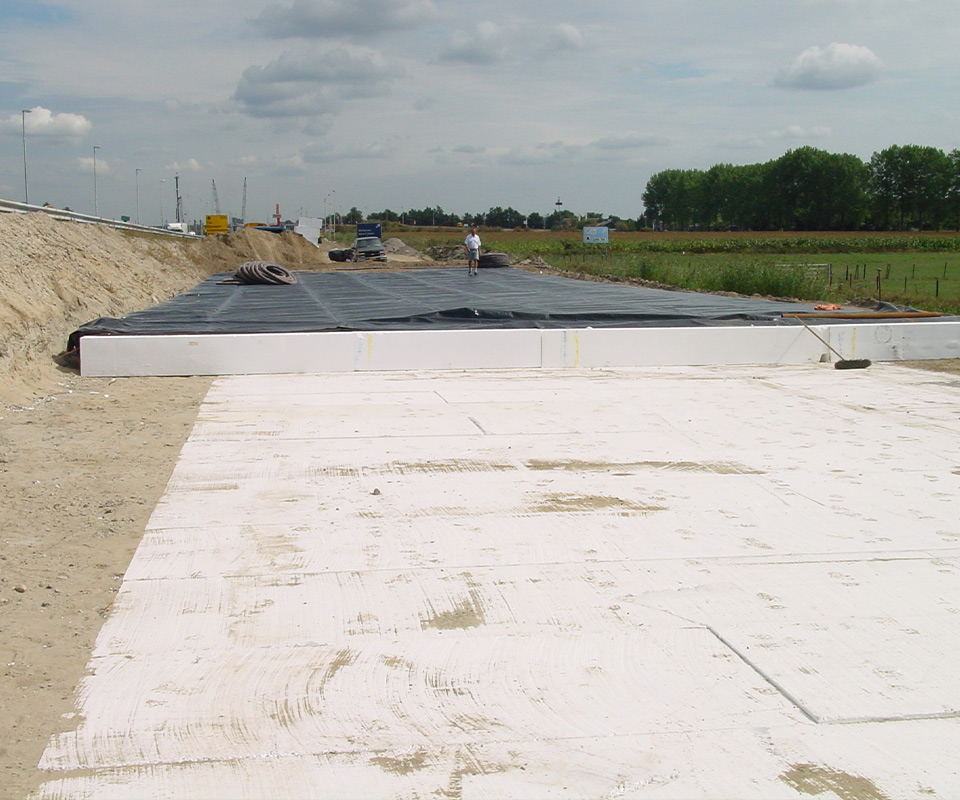
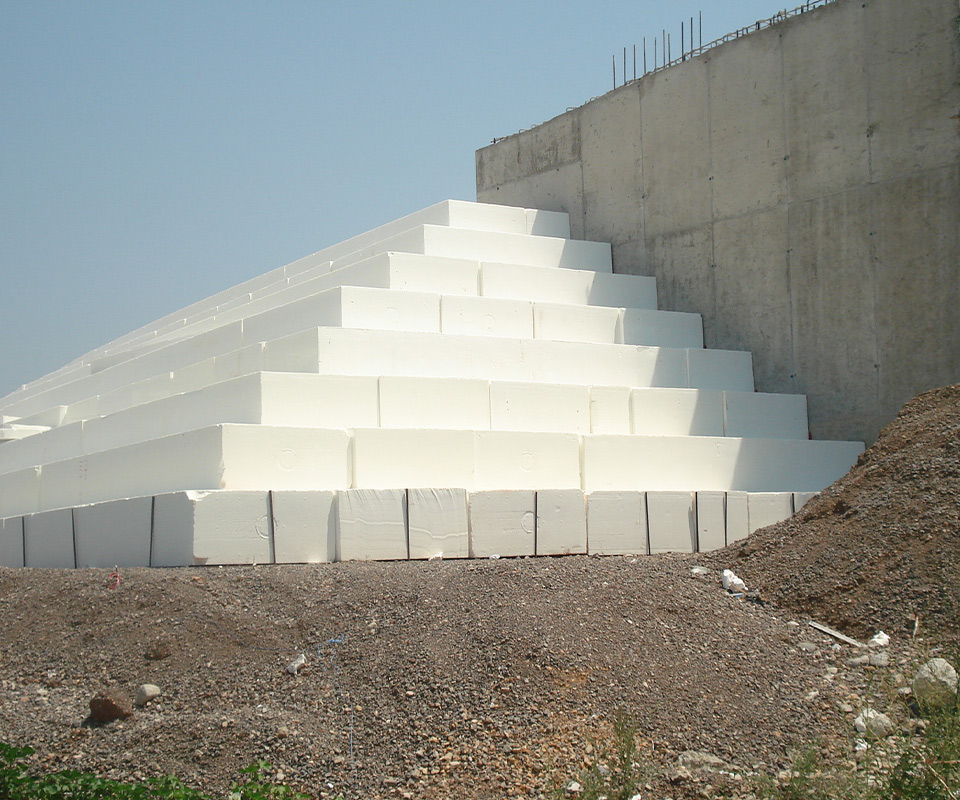
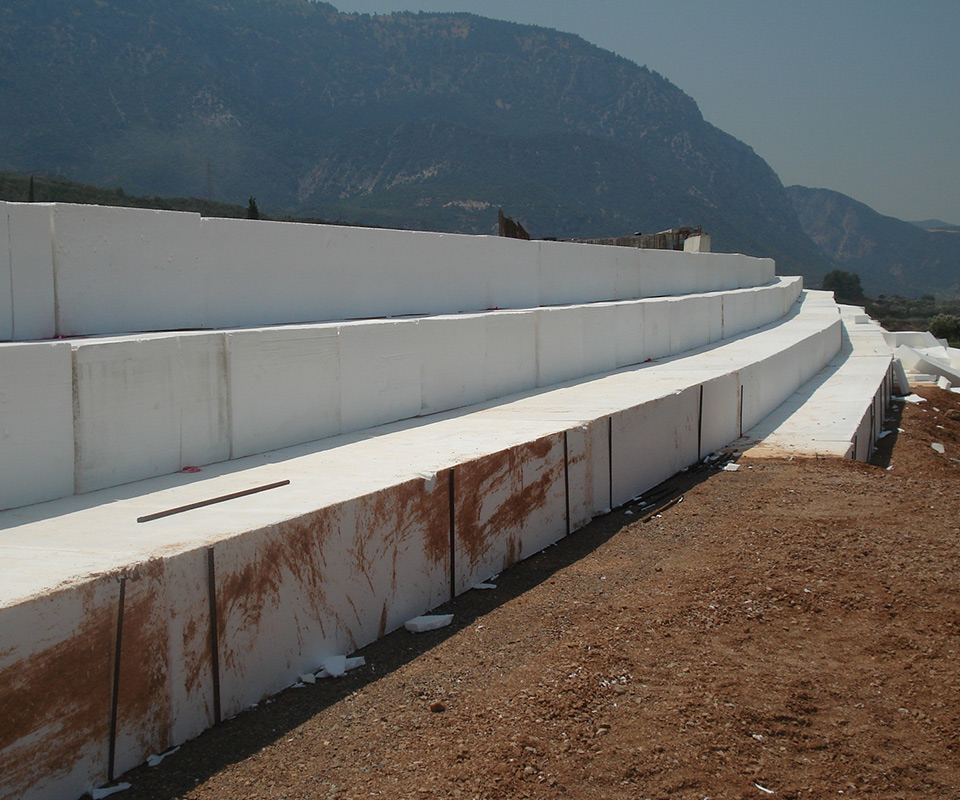
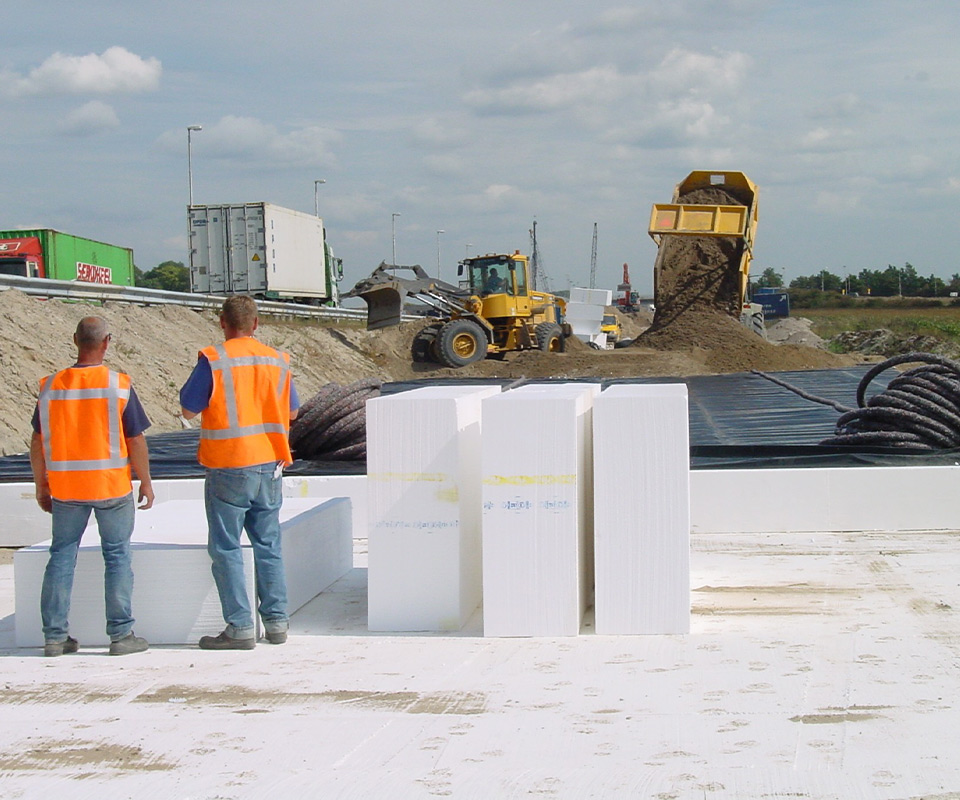
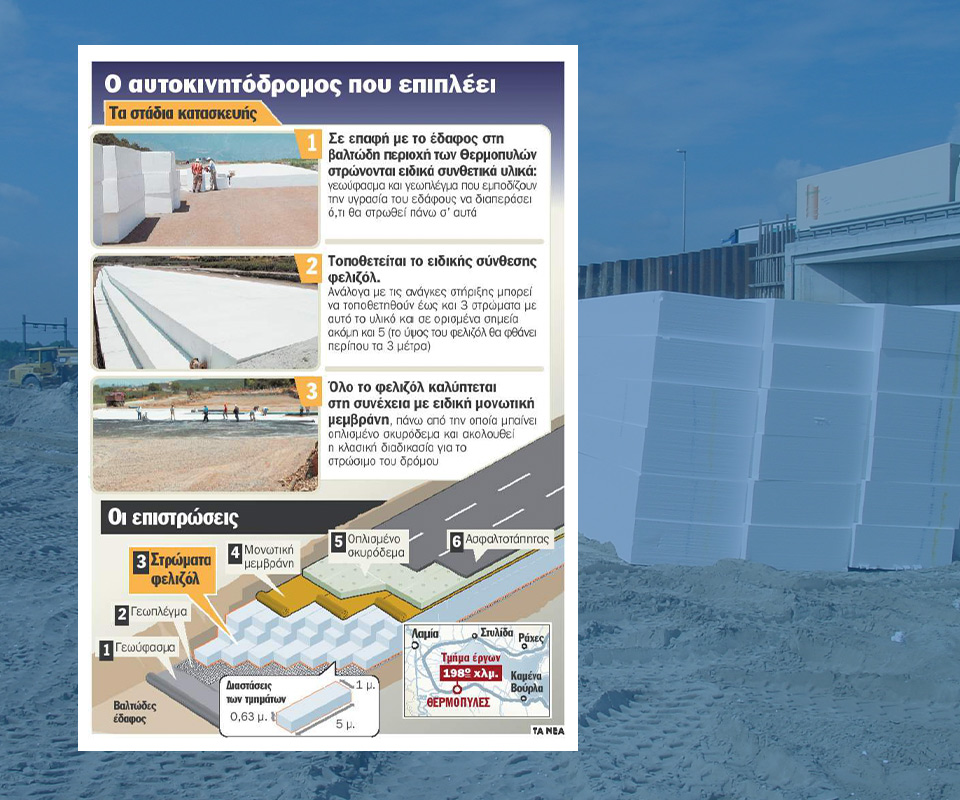
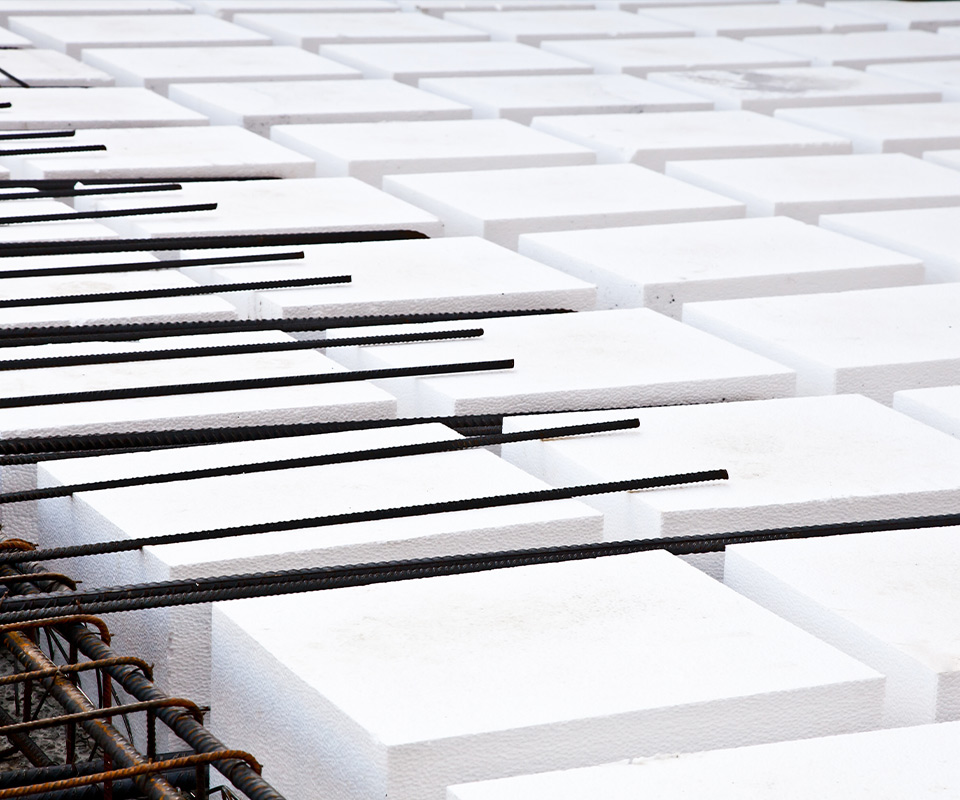
Geofoam EPS is the name of expanded polystyrene which is used in geotechnical applications and is practically covered by embankments replacing them to a large extent. Its low weight and special mechanical behaviour make EPS geofoam a reliable solution for the construction of light embankments on soft / compacted soils.
EPS geofoam weighs from 0.5% to 2.5% less than the conventional embankments and its use helps to reduce natural soil improvement and project maintenance costs as well as minimize settlement problems. It has been used for many years on a large scale all over the world. In Greece, two well-known and successful applications of EPS Geofoam took place on the E75 axis at the points of Kakia Skala and Malakasa.
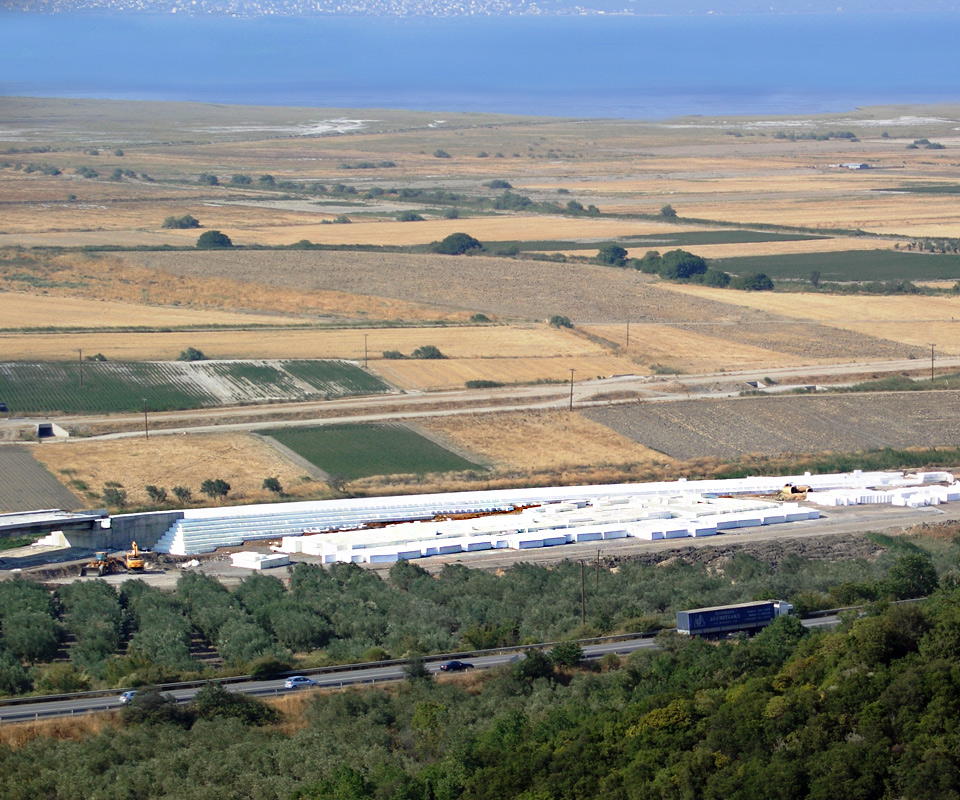
The most recent and largest geofoam project in Greece was completed in the summer of 2008 at the 198th kilometer of the Athens Lamia National Road (E75) at the Thermopyles bypass, constructed by ATTI-KAT. The project absorbed 50,000 cubic meters of EPS 100 quality Expanded Polystyrene for the embankments of one kilometer of main road and the transition embankments of the exit to Thermopyles. The subsoil at the specific point was very loose and could not support the weight of the embankments made of soil materials which exceeds 2 tons per cubic meter and the only solution was the use of Expanded Polystyrene EPS 100 weighing 20 kg per cubic meter, i.e. 100 times less.
Despite the very short duration of the project, which did not exceed 2 months, our company managed to deliver half the quantity required by the project, i.e. 25,000 cubic meters. The Thermopyles bypass has been in traffic for 17 years and thousands of cars and trucks pass over the EPS volumes every day without any problems. This project was the beginning for many more large projects of this kind since the technical world and the authorities and bodies of public works and not only recognized the value of the Geofoam solution compared to conventional embankments. Along with the course of the years, the great difference offered by the Geofoam solution will also be seen in the maintenance costs of the infrastructure projects as unwanted and often dangerous waves on the asphalt are prevented which, if they do not simply cause damage to the vehicles, can well divert them from their course putting the lives of their occupants at considerable risk. The choice of G. K. RIZAKOS SA as the main supplier of this project was not only a matter of proximity to the project but also mainly of quality and production capacity as the company's recent investments in mechanical equipment (2004) enabled it to produce a large quantity in high quality and in very short times."
The content of the web site pages related to Geofoam is part of the presentation of the Geotechnical Engineering Laboratory of the Civil Engineering Department of the University of Patras.
Use of expanded polystyrene in the foundations of buildings and infrastructure projects
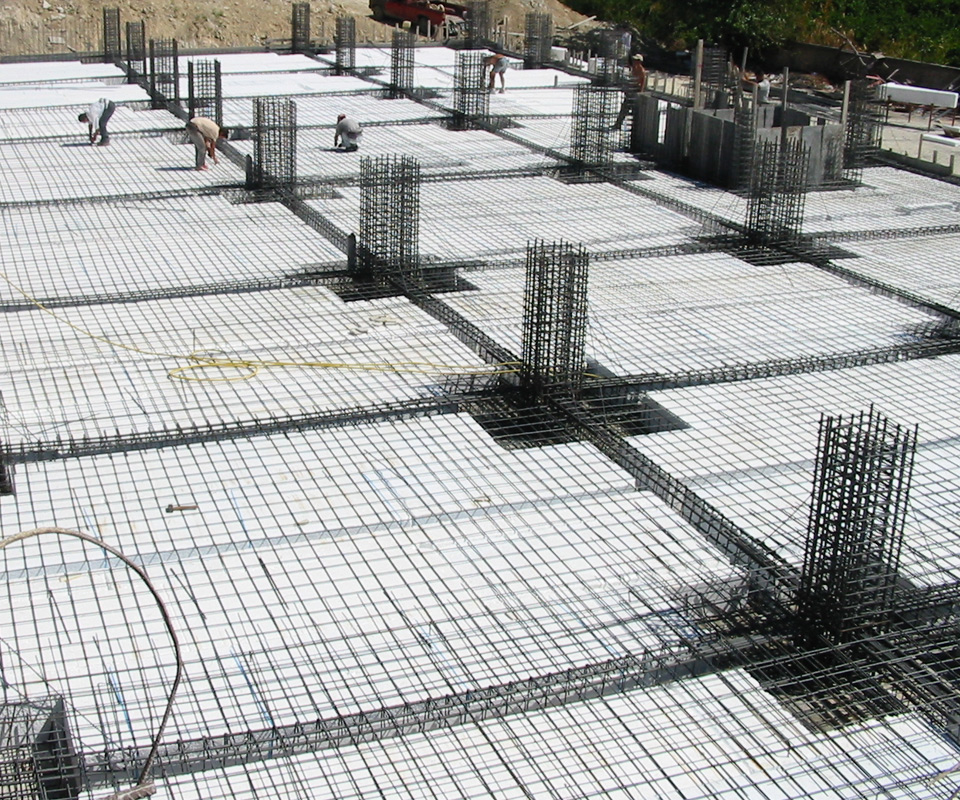
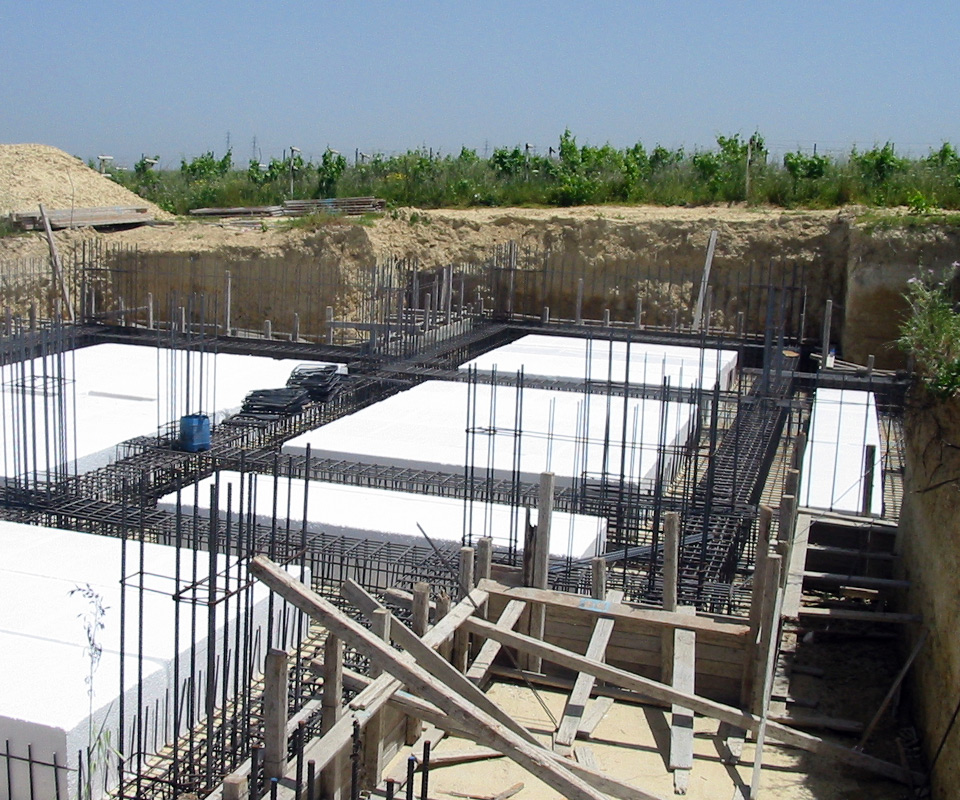
The excellent properties of Expanded Polystyrene (EPS) and its resistance to moisture, decay and fungi, make it an excellent material, with long-term performance in foundation applications.
With the use of EPS geofoam, effective seismic insulation of ground support structures is achieved with a significant cost reduction. Important parameters: thickness and density of insert wall height load intensity and frequency.
The effectiveness of the seismic insulation increases with the thickness of the compacted insert and with decreasing EPS density. For the design, the use of EPS 100 geofoam (20kg/m3) and the use of a seismic surcharge equal to 50% of that corresponding to a non-insulated wall (i.e. Αr=50%) is recommended. The required thickness of compressive insert depends mainly on the intensity of the base movement and the height of the wall and to a lesser extent on the flexibility of the wall.
The table can be used for planning:
Wall height h (m)
Seismic Zone
Ι
II
III
2
4
4
4
4
5
6
8
6
5.5
8
12
8
6.5
9.5
17
Percent thickness of EPS 100 insert (20 Kgr/m3), tr (%), to achieve seismic insulation efficiency Ar=50%
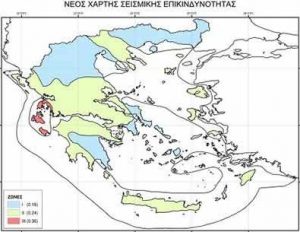
The study of the University of Patras gives us the way to calculate the thickness of the Expanded Polystyrene Geofoam that must be used for each underground wall whether it is a retaining wall or a building according to the seismic zone shown in the image below and the height of the wall.
The table shows the percentage of the height of the wall which gives us the thickness of the insert, e.g.
City: Lamia (from image) Seismic Zone: II
Wall height: 8.0 m (from table) 9.5 %
Therefore, its thickness should be 8.0 m X 9.5 % = 0.76 m EPS Geofoam. With this thickness, a 50% reduction in earthquake force is achieved.
The results indicate that:
The insulating capacity increases as the density of the EPS decreases and therefore it is desirable to use as light an EPS as possible.
Optimum efficiency is achieved by using a rectangular shape, i.e. with a constant thickness of insert in terms of height (taking into account the manufacturing flexibility).
The insulating capacity of EPS does not depend on the height variation of EPS stiffness and increases as the percentage thickness, tr, of the insert increases.
It is possible to achieve seismic insulation efficiency values of Αr>50% for thickness values of tr>15%.
Special Granules of Expanded Polystyrene (EPS) with Additive, Suitable for the preparation of heat-insulating & sound-insulating lightweight concrete
Ideal solution for mezzanines & lofts of metal buildings.
Mixture of virgin and recycled Expanded Polystyrene granules with granulometric gradation (diameter 3 to 8 mm) mixed with a special additive that allows perfect mixing with water, cement and sand if required, eliminates the floating effect of the granules and ensures homogeneous distribution of the mixture. Isolbeton granules are non-toxic and has fire classification of A2-s1, d0
They are indestructible and dimensionally stable over time. They do not contain hydrochlorofluorocarbons (CFC, HCFC) and nutrients capable of favouring the growth of fungi and bacteria.
The lightweight heat-insulating concrete produced using Isolbeton has the following characteristics:
Gross weight | Thermal insulation - Sound insulation | Economy to the carrier
Minimum seismic stress | Loss of elasticity due to walking
Expanded Polystyrene Concrete Quality Control Test Matrices
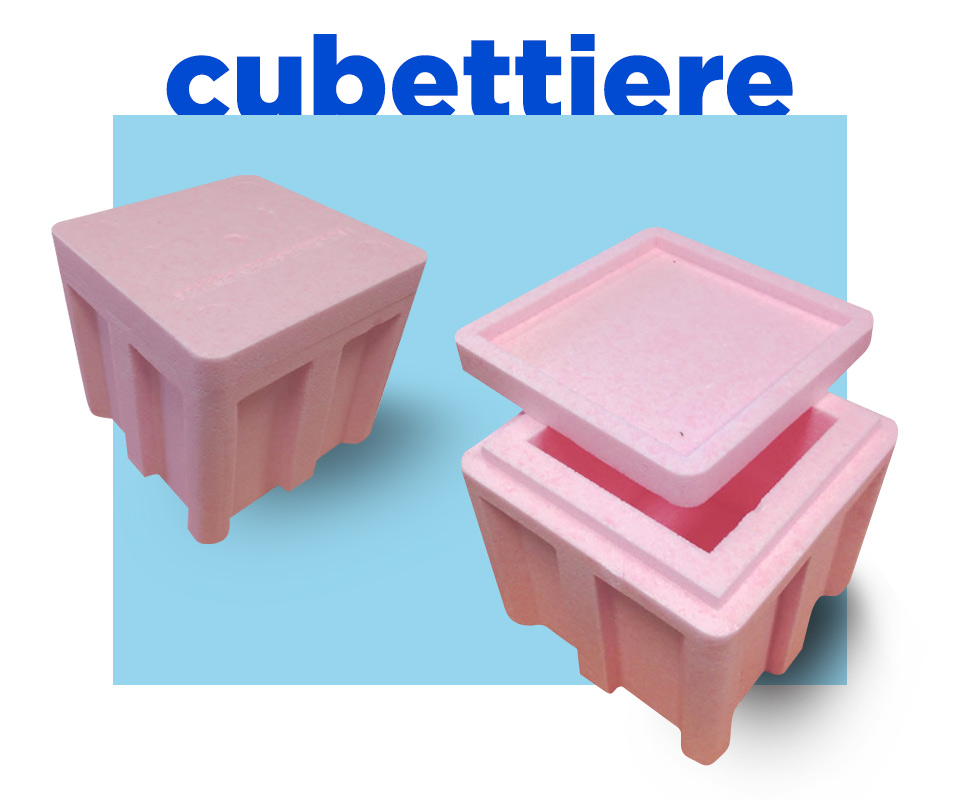
The mold has a certification of suitability for the production of concrete test matrices.
Expanded polystyrene (EPS) specimen dies are the new proposition in concrete testing. Cubettiere® are the most economical and safe solution offering the advantages of a lightweight, disposable material. The matrices produce a sample in the form of a cube with dimensions of 15 x 15 x 15 cm. The mould used to produce Cubettiere® is Certified.
Waste collectors
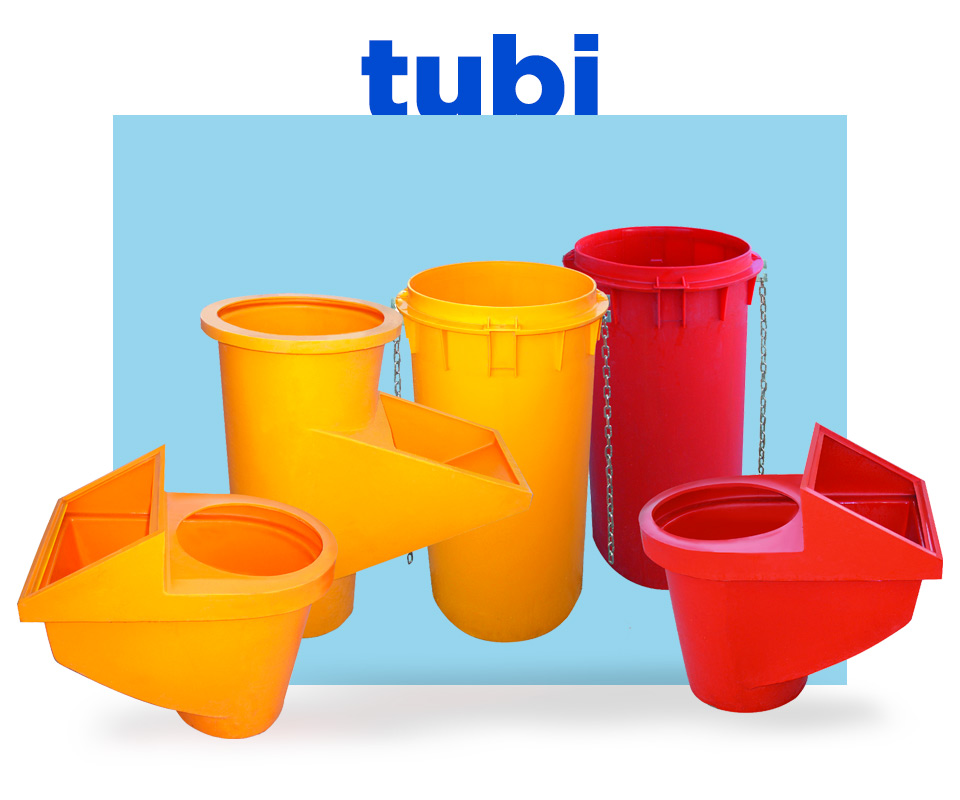
System of Plastic Pipes & Special Metal and Plastic Components for the Transport of Construction Waste from the Floors to the Disposal Point.
A system of plastic pipes and special metal and plastic fittings, necessary for the quick, safe and inexpensive transport of construction waste from the floors to the disposal point. It is an essential tool for any construction work in buildings above one floor.
Tubi collectors are produced from high quality polyethylene (HQPE) which is impact resistant, flexible but also hard to deform.
Safety during use is achieved by the robust construction and the special study of the support and connection of the parts, so that their accidental disconnection is impossible.
Nettuno Sistemi, a company synonymous with quality, presents its model in the manual series TMSlim. This model of hot wire cutter is a professional equipment for the cutting of FOAMED / EXTRUDED POLYSTYRENE AND POLYURETHANE FOAMS. High quality and heavy-duty machines, whose quality make them the top on the market. The different metric and angular adjustments allow performing various types of cutting for every building site need thanks to its telescopic frame it can cut boards up 1,250 mm.
Easy to handle and carry with its functional handle made on the frame and to its small overall dimension, it is easily transportable even in the boot of the car. Through the openable feet it can be positioned vertically upon the ground. TMSlim with its high precision, make the execution of standard panel cutting much easier during the installation of external wall insulation system. In fact, thanks to an accurate cutting, you will no longer incur either the creation of thermal bridges (as required by the existing legislation on energy saving in force), or least of all annoying and polluting crumble from traditional blade cutters or saws. For both straight and angular cutting or even for those with lathe, the result will look sharp and clean as if it had been performed at the factory.
IMPLICATIONS:
C/P On Order
# 125 X 60, 200 X 100, 250 X 60, 250 X 100
- common use in EUMEPS Member States
=not possible from the operational requirements
-not required/applied normally unless the properties are explicitly required
1) Where there are load distribution beams 2) when cargo is carried









 EN
EN  EL
EL